What is burnout?
Stress is the normal physical and mental response to demands or pressure in our lives, and is normal. Prolonged or
excessive stress is not normal though, and may lead to distress and burnout, with depletion of the brain chemicals which make us feel good.
Dealing with death and dying, or sudden and unexpected deaths and traumas, can be emotionally challenging. There are some ideas here to help keep yourself able to continue to care for others, while looking after yourself. If you think you may be developing burnout or exhaustion due to chronic stress, seek help as indicated at the bottom of this page.
Self Care
Often the advice to avoid or deal with burnout is to increase self care. To keep your brain healthy and avoid chronic stress everyone needs three things: relaxing, resting and sleeping. Self care also means trying to maintain a sense of self (what makes you, you) ensure a balance in how you use your time to achieve relaxing, resting and sleeping, as well as work.
Time for yourself doesn’t have to mean two hours of yoga (though that is great if you want to!). It does mean making a conscious effort to check that you are looking after yourself, and making time for relaxing, resting and sleeping. If you are already feeling burned out, then you may find it helpful to speak to your family and explain that this is as important as taking medicine.
Helpful suggestions to avoid or deal with burnout
Prioritise making time to do the things you enjoy in life – that give you energy and are fun.
Eat healthily – most of the time!
Try to get outdoors, even just for a walk around the block.
Take time to relax, especially if you feel stressed at work. This might be two minutes of deep breathing, or using an app.
Consider some of the “fun at work” ideas – taking 10mins out of a busy day to play a game or do a creative activity as a team.
Reflect on work at the end of the day – it may be helpful to write things down or complete an end of day checklist.
Exercise – whatever you are able to do from walking to rock climbing, it all helps.
Creative arts such as playing or listening to music, going to the theatre or cinema, painting or drawing.
Make time for friends and trusted others or loved ones – all are important.
What to do if you think you are suffering from burnout
The first step to dealing with burnout is admitting to yourself and others that there is a problem. The BMA have a brief tool which you can use to help screen yourself for symptoms of burnout.
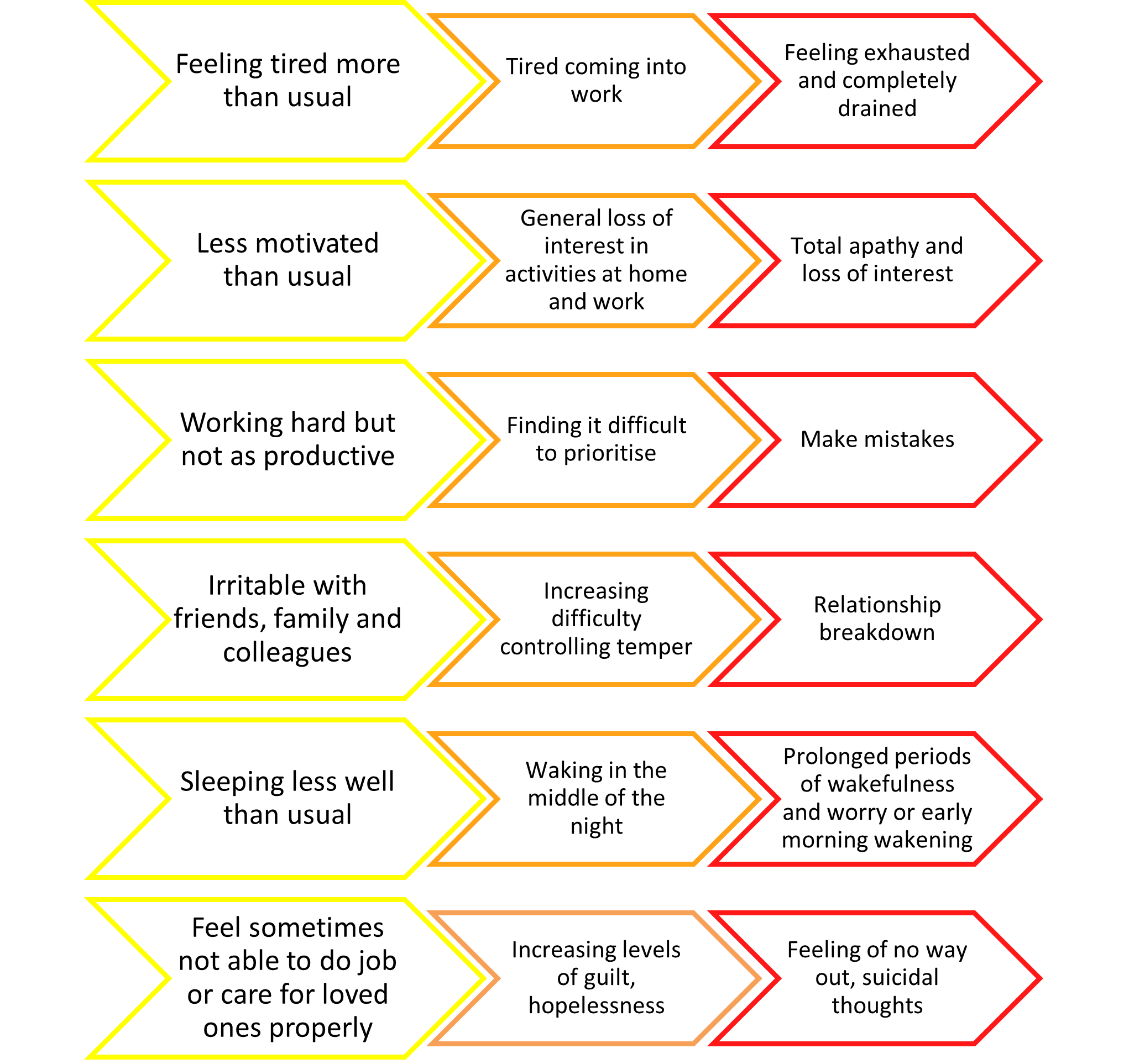
We have also developed a traffic light system to help you to identify when and where to seek help. Below is a guide to some of the signs of burnout you may recognise. On the left are signs of early burnout where the self care tips above and on the Beacon staff support page may be appropriate. It is helpful to talk to your manager and colleagues. If you are experiencing the signs in the middle column, then discuss with your line manager and discuss referral to occupational health or staff support. If you are experiencing the column on the right, in particular suicidal thoughts, feelings of dissociation or complete exhaustion and hopelessness then seek help from your GP immediately. There are also 24 hour helplines, including a service for all Health and social care staff run 24hours a day by NHS 24 (0800 111 4191), or the Samaritans – call 116 123.
There are Staff Support Services available for all staff via Beacon: Contact staff support service on 01387 241303 or email: dg.mhstaffsupport@nhs.scot. There is also a service for GPs and practice staff: dg.gp-psychology-service@nhs.scot.